It's been a while since I've listed these so there's probably some I've forgotten, but here's a bunch anyway:
Catherine Wheels: Crowded House
Off their Together Alone album, I had this little gem in my head the morning I found out Grandad had passed away. So it's now imbued with that sadness and poignancy in my head, and will probably forever remind me of that moment.
Your Love Goes On: Hothouse Flowers
Oh heck, I might as well just put their whole back catalogue on this thing. They're certainly my band of the year, partially because I saw them live, and partially because I've fallen in love with their music all over again. This song is one I actually don't have on an album, but it's awesome. Perhaps the best worship song ever.
Eyes Wide Open: Hothouse Flowers
Told you I might as well put them all on...but this one is a serious contender. It's so darn happy, and never fails to put me in a good mood. "I had the strangest...feeling...helping...of love coming on me."
Ghost of Tom Joad: Bruce Springsteen
My goodness, this is a great song. Many songs about being down and out glorify it, but this one has it in all its raggedness and sadness yet somehow dignifies it in some sense. As first world christians especially I think we overglamorize poverty sometimes ("Blessed are the poor..."), but this hits home to me the reality of it for most people.
"He pulls his prayer book out of his sleepin' bag
The Preacher lights up a butt and takes a drag
He's waitin' for the time when the last shall be first and the first shall be last
In a cardboard box 'neath the underpass
With a one way ticket to the promised land
With a hole in your belly and a gun in your hand
Lookin' for a pillow of solid rock
Bathin' in the city's aquaduct..."
Both Sides Now: Joni Mitchell
She just writes great songs that would sound good without music.
Rows and floes of angel hair
And ice cream castles in the air
And feather canyons everywhere
Ive looked at clouds that way
But now they only block the sun
They rain and snow on everyone
So many things I would have done
But clouds got in my way
I've looked at clouds from both sides now
From up and down, and still somehow
It's cloud illusions I recall
I really dont know clouds at all.
O Yeah: End of Fashion
I tried really hard not to like this...but there it is. A shameless piece of pop brilliance.
Leaving New York: REM
These guys are just amazing - still writing songs that move you with a simple four chord progression. The echo bit at the end won't fail to make your heart soar.
Then there's the Simon and Garfunkel section. I like to think maybe I was named after Paul Simon, even though I probably wasn't, but I know that my parents liked S&G, and therefore I probably heard it fairly young. Anyway, I got their Essentials this year, and it's been a great education in spirited folk (continuing from Joni). Favourites include:
Sound of Silence
How can you make a song that literally sounds like silence while making noise? They somehow did it. And included in it some of the best and most profound poetry/prose this side of Shakespeare.
The Boxer:
I've already blogged on this song, but it's an unbelievably well written lyric too.
Cecilia:
Counting Crows covered this a while back, and it's so much fun, with a really different beat and possibly the most foolishly optimistic lovesong ever penned. A whole lot of fun.
Making love in the afternoon
With Cecilia, up in my bedroom
I got up to wash my face
When I come back to bed someone's taken my place!
Cecilia, you're breaking my heart, you're shaking my confidence daily....
And then the outro:
Jubilation! She loves me again!
I fall on the floor and I'm laughing...
The 59th Street Bridge Song (Feelin' Groovy):
I have to admit, this song is forever going to be Anthony's. Just the second time he was here, he randomly picked up my guitar and started playing and singing a slowed down version. Every time I hear it now, I think of him and smile. Feelin' Groovy indeed.
Tuesday, August 08, 2006

SSS (Saturday Social Soccer) and world peace in the kingdom of God
I reckon Saturday Social Soccer could be the beginning of world peace, and a good example of the Kingdom of God in action. Too big a call? You be the judge.
Around the start of the world cup, Croz and Clarey decided that since soccer was all the rage ("that soccer is so hot right now") we should get a few guys together to have a kick each Saturday. I think the week we started there were 6 or 7 of us (mostly ex-Whitleans).
The week after, we had a few more. The week after that, a few more again. As the weeks went on, and word spread, different people turned up each week, friends of friends or friends of friends of friends. Attendances have fluctuated the whole time: people turn up when they can, and don't when they can't (too hungover, busy, or simply don't want to).
But what quickly emerged too was that this was not an invite-only affair. Within the first week or two, we would join up with others who were already playing, or who wandered past wanting to play. Just random people going past: often they were overseas students with nothing much to do who were wandering around watching the games. They could go from passive observers to active participants with a nod of the head. It was completely and utterly inclusive, no questions asked.
This week, only three of us turned up initially. People came in dribs and drabs, ones and twos mostly, to join in. Soon we had too many for one game, so we split into two. So we were outnumbered, not calling the shots if you will. The sense was that there was no 'we', no Whitleans and 'others', just people enjoying each others' company and skills.
And the inclusive nature of the exercise only improved the sense of joy created in its living out. There was, and is, no fear of the other, of the stranger, even when they "look different". There is a unifying factor in what they call 'the world game' that means that there is enough in common for the rest to fall away. There are no language barriers (which is good, because many who turn up can hardly speak English), no reason for grudges or anything else to separate. There is usually mutual respect, even when there is a gulf of culture.
It also fits in perfectly with Open Space principles: passion bounded by responsibility. Whoever comes are the right people. Whenever it starts is the right time. Whatever happens is the only thing that could have. When it's over, it's over. And the self-organizing of it all is quite amazing. People just make it happen, even make potentially contentious decisions (like who is on whose team, where the goals are placed and how large they are, when we start and when we finish) on behalf of the group, without demarcating who is the "leader" or "captain" or whatever. Considering this happens completely naturally, yet without disagreement, it's a surprising thing.
And there's grace in there too: we rarely mark the boundaries, so it's a matter of conjecture when the ball goes out of bounds and who brings it in. Or who decides when it's a goal and when it's not. There have been no arguments, no argy-bargy, just a go-with-the-flow attitude that means that even when one side is disadvantaged, no-one argues or gets upset.
By modelling the inclusive, nonviolent love of God, this is getting closer to the living out of the Kingdom of God. It's providing a concrete, positive example of cross-cultural harmony in action, and as such modelling to the rest of the world what things could be like.
Now all we have to do is get Hezbollah and Israel playing soccer on Saturdays at Princes Park. One o'clock. Bring a ball or your Aussie top.
Friday, August 04, 2006
thomas merton
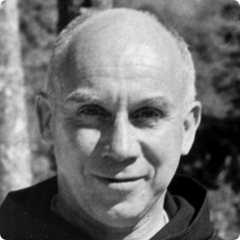 I went to a public lecture last night by Paul Dekar, about Thomas Merton as a public theologian. It was great to get a sense of the many facets of this man I've come to know through his writings on nonviolence. Despite being a reclusive Trappist monk for most of his life, Merton had a rather colourful existence.
His parents were both artists, which led him to draw, paint and write poetry throughout his life. This despite the fact that his mother died when he was six, and his father when he was sixteen. Merton was involved in a debate about Gandhi in 1931, during the famous Roundtable Conference in London, in which he defended Gandhi's methods and aims. This debate (despite his argument being so clearly anti-British - or seemingly so) was partly the factor that won him a scholarship to Cambridge. He left there suddenly after getting a girl pregnant.
After an attempt to enter the Franciscan order failed (he told them honestly of his past at Cambridge), he became a Trappist and, according to his friends, disappeared off the face of the earth for 14 years.
After having written many books during this time (of which he was rather proud, having become a bestselling author), he was suddenly confronted by someone who accused him of "verbology" - essentially, saying he was very articulate at saying precisely nothing. That stung him, and he never forgot it. In 1958, he subsequently experienced an "epiphany" at the corner of Fourth and Walnut Streets, and subsequently turned from a world-denying, elitist mysticism to one that connected deeply with the needs of the world.
His life was filled with many battles with his superiors over censorship of his prolific and controversial writings, a constant source of frustration for him, yet he remained absolutely faithful to his callings as a monk.
He died in 1968 (age 53), but the circumstances of his death would be comical if it weren't so serious. This incredibly articulate man of peace and prayer, who stirred up enormous controversy yet who led a reclusive life of contemplation, died when he turned on an electric fan. There he was, giving a talk to some Buddhists, then said, "I'll take some questions after a short break", went back to his room, and was electrocuted accidentally by the fan. It just seems like someone of his stature should have died on the front lines of peace march, or been assassinated like Gandhi or MLK Jr., or even died of old age, but no; he was killed by faulty wiring. Incredible.
Here are a few pearls and remarks of interest from his letters to Jim Forest:
"Technically I am not a pure pacifist in theory, though today in practice I don't see how one can be anything since limited wars (however "just") present an almost certain danger of nuclear war on an all-out scale. It is absolutely clear to me that we are faced with the obligation, both as human beings and as Christians, of striving in every way possible to abolish war. The magnitude of the task cannot be allowed to deter us. Even if it seems impossible, we must still attempt it. This demands of course a spirit of faith. Without the religious dimension, even pacifism and nonviolence are relatively meaningless. One cannot have nonviolence that makes sense if one does not also have faith in God. This of course complicates matters tremendously, because of the scandal that so many who claim to believe in God enlist him in their wars. God is always the first one to be drafted, and this is a universal stumbling block." (November 29, 1961)Brilliant.
(in reaction to the suicide of Roger LaPorte) "I cannot accept the present spirit of the movement as it presents itself to me. It seems that there is something radically wrong somewhere, something that is unChristian, though I am not questioning anybody's sincerity and good will, or even the objective rights and wrongs of the clearest cases. But the whole thing gives off a very different smell from the Gandhian movement, the non-violent movement in France and the nonviolence of Martin Luther King. Jim, there is something wrong here. I think there is something demonic at work in it. The suicide of a Catholic ex-seminarian (I was told) does not make sense in terms of a Christian peace movement." (November 11, 1965)
(In response to Jim's sense of desperation at the perceived failure of the peace movement, and frankly, it's frighteningly relevant for today) "Do not depend on the hope of results. When you are doing the sort of work you have taken on, essentially an apostolic work, you may have to face the fact that your work will be apparently worthless and even achieve no result at all, if not perhaps results opposite to what you expect. As you get used to this idea you start more and more to concentrate not on the results, but on the value, the rightness, the truth of the work itself...
The country is SICK, man. It is one of the sickest thing that has happened. People are fed on myths. They CAN'T think straight. They have a modicum of good will, and some of them have a whole lot of it, but with the mental bombardment everybody lives under, it is just not possible to see straight, no matter where you are looking. The average 'Catlick' is probably in worse shape than a lot of others. He has in his head a few principles of faith which lend no coherence whatsoever to his life. No one has ever sought any coherence from him or given him the idea that he needed any. All he has been asked to do has been to measure up to a few simple notions about sexual morality (which he may or may not quite make, but anyway he knows where he stands - or falls on his face) and he has been taught that the cross and sacrifice in his life mean in practice going off to war every twenty years or so. He has done this with exemplary, unquestioning generosity, and has reaped the results: a corresponding brutalization, which is not his fault and which he thinks has something to do with being a real human being. In this whole area of war and peace, no matter what the Council may have said about the average layman and the average priest are all alike conditioned by this mentality. Furthermore, when it is a question of a kind of remote box score of casualties which gives meaning to life each day, they no longer think of these casualties as people, it is just a score. Also they don't want to think of them as people, they want casualties, they want someone to get it, because they have been brutalized and this is a fully legitimate way of indulging the brutality that has been engendered at them. It is not only for country, it is even for God...
So the next step in the process is for you to see that your own thinking about what you are doing is crucially important. You are probably striving to build yourself an identity in your work and your witness. You are using it so to speak to protect yourself against nothingness, annihilation. That is not the right use of your work. All the good that you will do will come not from you but from the fact that you have allowed yourself, in the obedience of faith, to be used by God's love. Think of this more and gradually you will be free from the need to prove yourself, and you can be more open to the power that will work through you without your knowing it." (Feb 21, 1966)
Wednesday, August 02, 2006
young, growing God...
In honour of the impending birth of our second bub, I offer this great little reflection from a blogger I came across recently:
In Orthodoxy...Chesterton writes:Thanks.
A child kicks his legs rhythmically through excess, not absence, of life. Because children have abounding vitality, because they are in spirit fierce and free, therefore they want things repeated and unchanged. They always say, "Do it again"; and the grown up person does it again until he is nearly dead. For grown-up people are not strong enough to exult in monotony. But perhaps God is strong enough to exult in monotony. It is possible that God says every morning, "Do it again" to the sun; and every evening, "Do it again" to the moon. It may not be automatic necessity that makes all daisies alike; it may be that God makes every daisy separately, but has never got tired of making them. It may be that He has the eternal appetite of infancy; for we have sinned and grown old, and our Father is younger than we.
In a sense then, when Jesus tells his disciples that they must become like little children to receive the 'Kingdom of Heaven' (such as in Mark), he may not only be talking about dependence and trust, but about more deeply reflecting his image, becoming both more human and more like him.
Friday, July 28, 2006


mmm

Well worth a look.
Seriously...take the tour. In the immortal words of the Wayne's World trailer, "You'll laugh, you'll cry, you'll hurl."
Thursday, July 27, 2006
done

The story: we went on holidays to Rosebud for a week last year, and I think, "Hmm. A jigsaw puzzle would be a relaxing activity to while away some time this week." So I choose a 1000 piece one (a nice easy one of an old castle) from the op shop (ooh, 50c. expensive.) and show it to Julie. "Oh, come on, that's too easy," she says, "do this one instead." And she pulls out this one.
A year later, it's finally done.
So much for "relaxing".
Wednesday, July 26, 2006
ciaron o'reilly and pitstop ploughshares verdict
Australian peace activist on trial in Ireland cleared
July 26, 2006An Australian peace activist on trial in Ireland for allegedly helping disable a US navy plane in the lead-up to the Iraq war was acquitted yester-day. Ciaron O'Reilly, 46, from Mitchelton in Brisbane's north-west, was charged with causing criminal damage without a lawful excuse, after he and four other peace activists allegedly disabled the plane early on February 3, 2003 at Ireland's Shannon Airport.
Also acquitted at Dublin's Four Courts were Irish nationals Deirdre Clancy and Damien Moran, Scottish woman Karen Fallon and American Nuin Dunlop.
The unanimous verdict was handed down after about three hours of deliberations.
The five had pleaded not guilty. If convicted, they faced a maximum of 10 years' jail.
The group are members of the pacifist Catholic Worker Movement and follow the biblical mandate in Isaiah to "beat swords into ploughshares", or in simpler terms to dismantle military and nuclear arms equipment.
"The jury is the conscience of the community chosen randomly from Irish society," the group said in a statement on its website, http://www.indymedia.ie.
"The conscience of the community has spoken.
"The government has no popular mandate in providing the civilian Shannon airport to service the US war machine in it's illegal invasion and occupation of Iraq."
The US government estimated the group caused $US2.5 million ($A3.36 million) in damage to the aircraft.
The group did not deny they were responsible for the dismantling, but claimed they needed to disable the plane to prevent further damage being done in the Iraq war.
The group said the ruling should send a message that Ireland wanted no part in waging war on the people of Iraq.
"Refuelling of US warplanes at Shannon Airport should cease immediately," the statement said.
AAP
Sunday, July 23, 2006
street poetry

'you come here to me tonight
we'll collect those lonely parts and
set them down.'
we'll collect those lonely parts and
set them down.'
 Our section of Lygon Street (the same tram as in the first picture, but looking the other direction).
The more I look, the more I see the beauty that exists in everything around me. And that of God.
Saturday, July 22, 2006
prayer spot in winter
Things look so much different in winter, even on a sunny day. Compare these with these pictures taken last December.


Friday, July 21, 2006
wendell berry
Now I'm not normally one for poetry, but Brian McLaren introduced me to Wendell Berry, and I confess to being somewhat smitten. This is one called "A Warning to my Readers" that I can relate to, but check the site out for more.
Do not think me gentle
because I speak in praise
of gentleness, or elegant
because I honor the grace
that keeps this world. I am
a man crude as any,
gross of speech, intolerant,
stubborn, angry, full
of fits and furies. That I
may have spoken well
at times, is not natural.
A wonder is what it is.
Do not think me gentle
because I speak in praise
of gentleness, or elegant
because I honor the grace
that keeps this world. I am
a man crude as any,
gross of speech, intolerant,
stubborn, angry, full
of fits and furies. That I
may have spoken well
at times, is not natural.
A wonder is what it is.
the legacy of the israel/lebanon conflict
From this article in today's Age:
In a situation like this engaging nonviolence looks like trying to hold back the incoming tide, but as this article suggests, it is the only hope of a world locked into the cycle of revenge. Breaking that cycle is the only way to stop the carnage; yet in what seems to me to be the ultimate in irrationality, no-one is willing to take the first step. How people can't see that is beyond me, but then, so is the situation.The greater legacy is the human one. Every bomb dropped by Israel will have broken hundreds of Lebanese hearts. Some will have lost loved ones; others will have seen bridges, streets and houses that were painstakingly restored after decades of war smashed into the ground.
Those who witnessed it will not forget it, and they will carry a bitterness towards Israel for the rest of their lives, passing it on to their children. The bereaved families of Israeli civilians will feel the same way about their enemy.
From all the rational, strategic calculations, this is the factor that is so often missing: the hatred sown in the human heart. Both sides have ensured this dreadful conflict spreads, not just across borders - but down the generations.
Thursday, July 20, 2006
Tuesday, July 18, 2006
goatonapolists
 Found this in the paper this morning. This is from the website:
Goatonapole is the philosophy of being that holds that there is a Goat and a Pole and that the Goat is on the Pole. In the relation of Goat and Pole we Goatonapolists find an eternal thread of unfathomable cosmic significance, a point of reference in which all opposites dissolve into a unity of infinite breadth, a universal truth underlying the very fabric of existence. Upon contemplation of the Goat, the Pole, and their relative positions, one cannot help but realize that we've always been talking about Goatonapole. Whether we accept, reject, or live in ignorance of Goatonapole, we are all Goatonapolists.We are deluded by the machinations of abstraction and modern thought into thinking that the world of concepts is reality itself. Almost without knowing it we have wandered far down a path of self-delusion that has split us away from the foundations of our existence. Our casual dabbling in unquestioned abstractions, foremost the notion of the self as rational faculty, has spawned the many neuroses so inextricable from the modern condition.
Hysterical. Check out the website for more photos of goats on poles.
(yes I know it's not a real religion, but man, it's funny.)
(yes I know it's not a real religion, but man, it's funny.)
the boxer
"I am just a poor boy and my story's seldom toldSeriously, are these guys not two of the best poets the world has produced?
I have squandered my resistance for a pocketful of mumbles, such are promises
All lies and jest, still the man hears what he wants to hear
And disregards the rest...
...In the clearing stands a boxer, and a fighter by his trade
And he carries the reminders of every glove that laid him down or cut him
til he cried out in his anger and his shame
I am leaving, I am leaving, but the fighter still remains
Yes he still remains..."
Simon and Garfunkel - The Boxer
I was wandering around the supermarket yesterday with my mp3 player buzzing in my ears, and had two Simon and Garfunkel songs in a row; the second of which was The Boxer. It's funny how when I listen to music sometimes just a few words will stand out to you, and suddenly have significance you never saw before. Usually the rest doesn't really apply, but those few words will express something you didn't know you knew, about yourself or the world. I had that earlier in the year with Nirvana's In Bloom ("he's the one who likes all the pretty songs, and he likes to sing along...but he knows not what it means...") and then I had it today with The Boxer.
One of those lines that struck me yesterday from The Boxer was "still the man hears what he wants to hear/and disregards the rest". As I've been reevaluating Christianity, I realise that to a certain extent I've been doing that. I was telling the inspiral guys that I thought Lee Camp's Mere Discipleship was one of the best books I'd read on describing the Christian life, but Croz subversively replied, "Is that because it confirms what you already thought?" and I had to admit, yeah, it kinda is. I mean, it wasn't that crude or that simple because I'd come to most of it over a fairly intense period of reading, and synthesizing all that material (including life experience) only to find it all in one reasonably short book; but nonetheless, I was left with the question of whether I was now merely reading only that which confirms my ideas, whether or not they be misconceptions. After all, just because it feels right doesn't mean it is (doesn't mean it's not either). Maybe I'm not being very generous to myself; probably we all do it, realistically, but it's something I need to be careful of. There's often little difference between hearing the ring of truth and confirming your own prejudices.
I do it with other stuff too - the more I invest myself in nonviolence the more I see around me that acts in contrary ways, reinforcing the myth of redemptive violence. The current situation in Lebanon, with Israel retaliating with the most unbelievable overkill (literally) imaginable, I wonder how on earth it could come to this, how this could make sense to anyone, let alone be justifiable. Then I heard this as part of a Pace e Bene podcast yesterday:
"Creative nonviolence recognizes that each of us has tendencies towards violence and love. It maintains, as the Soviet dissident Aleksander Solzhenitsyn put it, "the line dividing good and evil cuts through the heart of every human being." Each of us has only a piece of the truth, and therefore each of us also has a piece of the untruth. Creative nonviolence fails when it is arrogant or self-righteous - especially when it claims to be free of violence, or when it asserts that only the 'others' are violent."It humbles me to realize that I am not free of violence, but also that we need each other in order to be whole - it's so much easier to divide myself off from everyone I disagree with or have trouble with. So I, like Simon and Garfunkel's boxer, carry the reminders of every glove that laid me down or cut me till I cried out in my anger and my shame, "I am leaving, I am leaving, but the fighter still remains."
And it does remain. But I am leaving...I am leaving.
Thursday, July 13, 2006

Tuesday, July 11, 2006
perseverance
Perseverance – yes, more and more one sees that it is the great thing. But there is a thing which must not be overlooked. Perseverance is not hanging on to some course which we have set our minds to, and refusing to let go. It is not even a matter of getting a bulldog grip on the faith and not letting the devil pry us loose from it – though many of the saints made it look that way. Really, there is something lacking in such a hope as that. Hope is a greater scandal than we think. I am coming to think that God (may He be praised in His great mystery) loves and helps best those who are so beat and have so much nothing when they come to die that it is almost as if they had persevered in nothing but had gradually lost everything, piece by piece, until there was nothing left but God. Hence, perseverance is not hanging on, but letting go. That of course is terrible. But as you say so rightly, it is a question of His hanging on to us, by the hair of the head, that is from on top and beyond, where we cannot see or reach. What man can see the top of his own head? If we reach it – this we can do – we stand a good chance of interfering with God’s grip (may He forgive us).
Thomas Merton, in a letter to Dorothy Day dated February 4th 1960. From The Hidden Ground of Love: Letters by Thomas Merton.
sin, guilt, freedom
Jude raised an excellent point about sin and forgiveness in her comment on the Kingdom of God post. Sin very often remains an oppressive force with substitutional atonement, because one is constantly wary of having to confess each individual instance in order to have it absolved; otherwise, God's grace is powerless to forgive, it is said (or implied). That's a stressful way to live (or not live, really).
I think substitutional atonement places such an emphasis on guilt (seen as offence against God) and forgiveness that is ends up being oppressive rather than lifegiving. Or that's been my experience, anyway. Brian McLaren made an excellent point in a recent Rev Up when he said that sin is not as much about guilt, as it is about slavery (interestingly, this comment had the most resonance for the audience of anything else he said, which was hugely obvious for me sitting at the back of the room). The Bible talks about this again and again, yet because we are shaped by our reading about sin through a guilt lens rather than a slavery one, we never notice it.
That is, sin is oppressive precisely because it locks us into a spiral of destruction from which we by ourselves are powerless to break free. We are bound by it. Jesus' nonviolent, loving response to sin broke its power over us. His resurrection gives us the power to live (where life is equated with living the way of God, not merely existing).
But I guess ultimately what I'm saying is that past sin (which is very much the focus of substitutional atonement) is not as much the point as present sin. Forgiveness is not just about wiping the slate clean (although that is certainly true, and is a palpable relief for many of us), but is about redemption. God somehow redeems my mistakes (sin) and in so doing, frees me from their consequences. Actually God's grace frees us from the consequences of our sin anyway (Rom 5:8 "But God proves his love for us in that while we still were sinners Christ died for us" italics added), but with confession they are stripped of their power to bind us in future. That is the sense in which past sin is not as important as present sin. Insofar as I am living into the vast, unfettered future afforded me by God's grace, I am being saved.
That's not to say we ignore or gloss over past sin; aside from anything else, reparation being made for that is part of what it means to love positively in the present (which is why restorative justice is so much more lifegiving than retributive or punitive justice). And being aware of past sin means being aware of what power it had over you and perhaps still does if you're not careful to live into the freedom you've been afforded. But living means being fully present, not preoccupied with past or future. Expanding our now, as Harrison Owen says.
Athol Gill apparently used to say that the evangelical problem was not that we take sin too seriously (which appears to be the case because of the excesses of substitutional atonement) but that we don't take it seriously enough. In some way we fundamentally misunderstand what sin is if we merely conceive it as breaking God's rules or offending God's honour. But that's for another time, and another post.
Friday, July 07, 2006
stencil art
There's plenty of stencil art that keeps popping up around the part of Brunswick where I live. Apparently Melbourne has become the stencil art capital of the world - breeding a new kind of artist. I know a lot of people consider it awful and an eyesore, but as one person I heard interviewed about it said, "Where people are happy and have nothing to worry about, there is no stencil art. It's only where people are struggling, and finding things hard that this kind of thing provides an expression for that pain." At the very least, it makes for a visually interesting area.


for the Kingdom of God
What if Jesus didn't die on the cross to assuage the wrath of a just God bent on vengeance?
A little while ago I wrote about how and why substitutional atonement doesn't grab me (that's an understatement) as a way of understanding Jesus. Now, after a journey that has lasted since I first felt uncomfortable with substitutional atonement (I remember I was thinking about it at least around age 10), I think I finally have an alternative that works, and so I want to make a positive statement of what I do believe. Understand this is not a definitive, for-all-times-and-all-places statement, but one that helps me make sense of the Christian story from my perspective.
Traditionally, we are told that Jesus died as a substitute for us - that is, we are going to hell because we have sinned (offended God, in this case) and the punishment for that is eternal death (hell) when we die. Jesus was used by God as a substitute punishment, and so if we accept Jesus into our life (whatever that means - usually praying a certain prayer involving asking for forgiveness and repenting - turning from our sins), we are forgiven and will go to heaven when we die.
I prefer the original meaning of atonement - not the guilt-inducing meaning we've come to associated with it, with all its bloody, sacrificial imagery - but the reconciliatory, restitutional meaning, literally AT-ONE-MENT.
To summarize a couple of reasons why substitutional atonement is unsatisfactory:
1. Jesus life and ministry before his death becomes fairly irrelevant. It's kind of nice to hear some stuff that God reckons, but the sense is that its less significant than the 'real show' in Jesus' death. Under substitutional atonement, even the manner of his death is not all that significant - who did it and why are almost irrelevant - although the more we play up his suffering, it seems (ala Mel Gibson) the more Jesus had to go through to pay for our sins, and therefore the more he seemingly (yet perversely) earned it.
2. God is made out to be a monster, bent on securing someone's death as punishment for his offended ego, even if it's his own son. A "Must...kill...something" kind-of-a-God. Plus God then asks something of us that he doesn't do himself - namely, forgive without being repaid or restituted.
3. The resurrection also has less significance under substitutional atonement. Jesus would've 'atoned' just as satisfactorily for our sins had he remained dead. Resurrection, then, becomes like the lovely but unnecessary bonus prize rather than the central motif it was for the disciples. Living on (or again) was, for them (when they finally got it), the fulfillment of Jesus' life, not a supernatural party trick that impressed them enough to go through with the rest of it.
4. It is disempowering. You have debts that you owe that the system is stacked against you having the wherewithal to pay. Some would say that's why we need to throw ourselves on the arms of grace - but what kind of just system is stacked against you from the get-go?
5. It often makes your life after being "forgiven" or "converting" or "being saved" (conceived as a point-in-time) fairly irrelevant. I always used to puzzle over this, because as a Christian there was little or no incentive to better myself or even be obedient to God. Sure, there was the "God wants you to" guilt-trip, but when God will forgive you when you ask anyway, what's the point? Salvation is too far removed from action.
So what am I proposing? Well, nothing new in a lot of ways, but new for me. Maybe a different, more genuine, way of seeing Jesus' life, death and resurrection. Probably just a lens - but for me, one that works and inspires rather than one that leaves a nasty taste in my mouth, holding uncomfortable contradictions (not to be confused with paradoxes) that can't be satisfactorily resolved. It also makes much more sense of the biblical witness - with gospels in which Jesus talks more about the kingdom than anything else, and talks about himself as a sacrificial lamb rarely if ever. With Paul who focusses almost completely on the suffering inherent in being a Christian, not because of that specific time and place, but because Christians as people who are for life-in-all-its-fullness necessarily clash with a system that is bent on destruction and hate and death (even when that system doesn't appear to be that way).
Jesus, in other words, shows us how to participate in the building of the Kingdom of God, a new society characterized by self-giving love; but more than that, he enables its happening in and around us. In that sense, in the context of Jesus' life, his death is not merely one of many possible endings, it is the fulfillment of the way of God, and his life prior to that. This (his persecution and death) is the kind of thing that happens when you follow this way of life - but the positive flip side of that is that this is the way to truly live, not merely the negative consequences of it. This is how to effect the Kingdom of God - by lovingly giving of oneself (not just in death either).
Jesus did pay as a result of our sins, but not to assuage our guilt or in place of a wrathful God bent on vengeance. He did it to show us that there was another way; not just to show, but embody the way to life. The sense in which Jesus took our sins upon him was the he bore the brunt of the very kinds of things we do - hateful, violent, ugly things (sin). Whether they hurt ourselves or others, they embody a way of death in and of themselves. The sins Jesus bore are our sins because we are complicit in the system that killed him - it is something we do every day.
But it is the way he bore them that is perhaps of ultimate significance, as it shows us not merely an expedient method of getting your own way, but demonstrates the way of God. He bore them nonviolently. Nonviolently does not mean passively - it means actively breaking the power of those who oppose you by sheer force of rightness and integrity, and by your commitment to those things. It is a very different way to the way we are taught and socialised into acting to make things happen; the ends justify the means, don't let it cost you, lie cheat and steal your way there if necessary, step on whoever you need to to get there. As John H Yoder puts is, "Suffering is not a tool to make people come around, nor a good in itself. But the kind of faithfulness that is willing to accept evident defeat rather than complicity with evil is, by virtue of its conformity with what happens to God when he works among men [and women], aligned with the ultimate triumph of the Lamb."
And Jesus did so because this is definitional of both the personhood of God and life-in-all-its-fullness itself (though the two are inseparable). This is what we have failed to grasp; that God is not interested in the kind of power that dominates, that forces its will on others. This is the kind of power that instead prefers to love, even when it costs everything. And the Christian story is that this kind of love, this kind of power, wins. That is perhaps the most counter-intuitive, most staggering truth ever devised, let alone embodied. That is the significance of Jesus.
His sinlessness consists in his complete lack of complicitity in the system that killed him, the system that we daily participate in and perpetuate as human beings. It's not that God needed some kind of unblemished sacrifice because he's incredibly fussy about the kind of sacrifice that is made to him, but because it only makes sense in the context of someone who does not give in to the sin systems around us - what Wink calls the Domination System.
Jesus' life takes on much more significance because it's his demonstration of how we are to truly live, not just exist (or even have a "happy" or "successful" existence). Resurrection, then, becomes central because it means that for people who choose this way death is not the end; life wins anyway, even in apparent defeat. It's a no-holds-barred, no-fear approach to life (after all "perfect love casts out fear"!(1 Jn 4:18))
It makes more sense of grace too, because grace is not merely a free ride (Bonhoeffer's "cheap grace"), but is the way that God actively withholds the natural consequences of our sin in order to enable our choosing of life-in-all-its-fullness. There is no tension between salvation by faith or works here.
Salvation is not something that we achieve or even receive at one point in exchange for our loyalty - our salvation lies precisely in the acting out of that loyalty to the kingdom above all else. They are one and the same. Thus we "work out" our salvation, rather than receiving it. We are nonetheless graced (and therefore receive it) in the sense that God did this regardless of our potential-or-actual reaction to it, but because of who God is. Grace is free precisely because it is something we cannot effect on our own. God's grace in withholding the deathly effects of sin enables us (through God's power, because "no-one loves apart from God") to "work out" our salvation. All questions, then, of whether one can "lose one's salvation" become moot.
So nonviolent love is the expression of God's kingdom on earth. How else can we see Jesus' pronouncement to Pilate, "You have no authority except that which you have been given from above" (Jn 19:11) except as a concretely political statement of nonviolent commitment to an alternative kingdom? It's a slap in the face for the powers of this world, a denial of their power in real terms - not just as a statement for beyond the grave, but for here and now. Again, Paul in Col 2:15 "He disarmed {Or [divested himself of]} the rulers and authorities and made a public example of them, triumphing over them in [his cross]." As Walter Wink puts it, "The powers had used their final sanction against Jesus and had failed to silence him. Not even death could hold him. But if a mere Galilean artisan has withstood the entire Domination System and has prevailed, then the power of the Powers is not, after all, ultimate. There is another power at work in the universe that, like water, cuts stone: nonviolent love." (The Powers That Be, p. 80) In other words, if you can't win even when you do your worst, what is left but defeat?
Try reading the whole New Testament this way and suddenly it all makes so much more sense. Of course there's more - lots more - to the story in terms of revisioning heaven and hell, sin, separation from God, etc. but this is a start at least. And it's probably not been expressed very well. But for me, it's an energizing, exciting, inspiring message, one that I can't help sharing and living out. That's gotta say something for it.
Thursday, July 06, 2006


Wednesday, July 05, 2006

Thursday, June 29, 2006
stories
"I will tell you something about stories,
[he said]
They aren't just for entertainment.
Don't be fooled
They are all we have, you see,
all we have to fight off illness and death.
You don't have anything
if you don't have the stories.
Their evil is mighty
but it can't stand up to our stories.
So they try to destroy the stories
let the stories be confused or forgotten
They would like that
They would be happy
Because we would be defenseless then...
...there is life here for the people,
And in the belly of this story
the rituals and the ceremony
are still growing."
Leslie Marmon Silko, Ceremony.
update
Haven't felt much like writing since Grandad, but here's a brief rundown on what's happened:
- had guts ripped out by Italian soccer team (or more correctly, the referee) in the world cup.
- new Counting Crows live album (New Amsterdam). lazy, lazy men. four studio albums, one best of and two (official, general release) live albums. that's almost as much unoriginal material as original. most bands wouldn't get away with that.
- started working on some nonviolence stuff including a possible collaborative event with urban seed.
- u2 looks like November 18, but still not "officially" confirmed.
- still waiting for bub, but could be any day or time, even though we're only 34 weeks.
will write more when I feel like it.
"Advice to writers: Sometimes you just have to stop writing. Even before you begin."
-- Stanislaw J. Lec (1909 - 1966), "Unkempt Thoughts"
Sunday, June 18, 2006
Grandad
My Grandad died at 7 am last Thursday. Don't really want to blog about it at this stage, but I do want to mark the event, so I'll just tell one story.
The last time I spent a significant time with my Grandad was a little over two years ago when, while we were living at Whitley, we took him to the zoo. I think it was the first time he'd been to the zoo. I pushed him around in his wheelchair, which meant we got to experience it all together.
We arrived at the otter enclosure, and as he looked at the little animals scampering around, he thought at first that they were stoats. He turned to me and said, "Do you know the difference between a weasel and a stoat?" I confessed I didn't know, but being well aware of how widely read he was I anticipated a lesson in the intricacies of the animal kingdom.
"Well," he said, "a weasel is weasily distinguished, because a stoat is stoatally different."
Saturday, June 17, 2006
why is it so?
Why is it that there is not one op shop on the entire Mornington Peninsula that does not stock a copy of Michael Crichton's Prey?
And what kind of sick puppy is going around removing one piece from every single jigsaw puzzle in those same op shops?


And what kind of sick puppy is going around removing one piece from every single jigsaw puzzle in those same op shops?








Thursday, June 01, 2006
in the zone
I've never been so...great.
Not happy.
Not perfect.
Just...right.
I don't even mean it just in terms of how I feel. I mean, mostly it's a feeling, but it's more than that. It's a rightness with the world...with me.
I've been saying recently that the goal of life isn't happiness, it's fulfillment. Happiness comes and goes, and it's great while it lasts, but it never does last. That's why I don't want to rely on feelings - feelings are fleeting. But this feeling, this sense...it lasts. And it has lasted. And it goes deep. It's awesome.
I can only describe it as like being in the zone.
I'm in the zone. Like I'm right where God wants me to be. Or maybe like I'm acknowledging that where I am is where God wants me to be. Not a God-imposed place...just a God-intended place. A me-living-me place. Or maybe I'm just where I am, and finally ok with that.
And now I'm looking forward to a break. A well-deserved break. A chance to reflect on where I am. Where I've come from. Where I'm going. Expand my now, as Owen says. Hooray for large, even enormous, nows.
I am ready
I am ready
I am ready
I am...fine
I am...fine
I am fine.
Tuesday, May 30, 2006
cindy sheehan and the moral left
 Last Thursday I went to an anti-war rally at RMIT. Cindy Sheehan was amongst the speakers for it, and since peace is what I'm trying to pursue, it seemed like a good thing to experience.
First Jim Dolce played some songs: one about Coretta Scott King (wife of Martin Luther King Jr.), and he finished with John Lennon's Imagine. He asked people to join in, and if you ever had any doubt that Australians don't do well with public group singing, this was it. His version was moving (on the ukelele), but that was offset by the uncomfortable uncertainty of the crowd's involvement.
Kerry Nettle, the Greens senator, spoke first. The Greens, I think, play an important prophetic role in government; they'll never have a majority, but they can speak what the majority in the house are too afraid to admit. And she's young: 32 I think, which helps.
Then Dr Salaam Ismael spoke. Interesting, since his name literally means 'peace' in Arabic. Anyway, he's an Iraqi doctor who started the "Doctors for Iraq" organisation. It's basically a collection of Iraqi doctors who are trying to undo the damage the war has done. Courageous work, and they're really up against it. His stories and pictures were harrowing, and gave you a good idea of how bad it is there. And it's bad. He was refreshingly not anti-American, although he was certainly scathing of what they've done there. Basically he was saying that the war was supposed to make things better, yet they've been made much worse. The destruction and loss of innocent civilian life and livelihood is absolutely inexcusable.
Finally, Cindy Sheehan spoke for a while. If you've never heard of Cindy Sheehan, she's the woman who has been giving George Bush a hard time in America over the Iraq war, as her son was killed in combat over there. In fact, she's pretty much the face of the anti-war movement in the US. It's weird, because when she got up and started to speak you realised that this was not a woman who was born to lead an anti-war movement; this is a woman who was born to be a mother. Not in the symbolic, "mother of a movement" sense, just an ordinary mother. I mean that with the utmost respect for motherhood as the highest vocation on earth. But the overwhelming sense was that this woman is just like any other. No special gift for public speaking, no charisma, no stage presence. Seriously, she could seemingly not be more innocuous. The only difference between her and anyone else is that she did something about what she believed.
And it fascinated me, this idea that she was just an ordinary mother, because we think that we somehow need to have special talents, or special connections, or whatever else, to change the world, or make a difference. She has changed it because she's been prepared to go above and beyond what most people would. Let's face it, there are probably almost two and a half thousand American mothers who have a reason for the Iraq war never to have happened; but she's the one who camped on Bush's doorstep for 5 weeks. She's the one who has gone to jail four times for political dissent (no other reason than that). She's the one who has travelled around the world petitioning world leaders to stop this war. All because she was prepared to do what it takes.
Someone once said the difference between the way the world is and the way it can be is the difference between what we do and what we can do. That is, if only we all did whatever it took, in the way she has done, there would be no hunger, no oppression. We're capable, just not willing.
The other thing that struck me (and strikes me at all of these kind of clearly-leftist meetings) is the blatant hypocrisy of the angry rhetoric. It was toned down slightly because this was organised by a coalition of almost 80 peace, justice and other groups, rather than the one or two (usually socialist) organisations that usually do these things, but it was still pretty obviously one-sided. It just makes me feel less sympathetic, and alienates a lot of people, when the talk is as extremist as it usually is. And the hypocrisy frustrates me - all this talk of tolerance and love and peace and the dignity of all human life punctuated by hateful descriptions of John Howard or George Bush as evil, bloodsucking tyrants. What the...?
I find it frustrating because I want to work with them, even where our opinions differ, but the extremism alienates me. These people talk of the nonviolence of Gandhi and Martin Luther King, yet fail to notice (or just outright reject) the "love your enemies" message that was central to those activists' lives. The reason I still go to these kinds of things is because I think it's important that we align ourselves with people who share our convictions about the world, even when we differ greatly with those people in some respects. Ched Myers talks about this in Who Will Roll Away the Stone. In his chapter entitled "Why do you disciples not live according to the tradition?" he challenges our desire to work only with those who agree entirely with us, in favour of a more diverse, collaborative approach.
This, amongst other reasons, is why nonviolence is the only way to peace. Nonviolence, far from being simply the absence of violence, is the active embracing of all people. Warmongers, enemies, murderers - everyone is capable of being won over by the protection and affirmation of their essential humanity. And even if they're not, you have acted with integrity and consistency.
So I'll keep going to these kinds of things, and maybe even get more involved. And I'll keep speaking the message of peace through nonviolence.
culture jam
hilarious. Nonviolent direct action at its most amusing.
And then this one from Michael Leunig amid talk of Howard stepping down, featured on the same Mediawatch episode. The Sydney Morning Herald refused to run it, in contrast to the Melbourne Age. The editor's reasoning? It's in bad taste.
 Leunig's response was to quote a former Age editor: "A cartoon in good taste is a contradiction in terms." And then he penned this cartoon.

And then this one from Michael Leunig amid talk of Howard stepping down, featured on the same Mediawatch episode. The Sydney Morning Herald refused to run it, in contrast to the Melbourne Age. The editor's reasoning? It's in bad taste.
Leunig's response was to quote a former Age editor: "A cartoon in good taste is a contradiction in terms." And then he penned this cartoon.
Monday, May 29, 2006
the blog backlash
I've noticed recently a lot of conversations bagging blogging. Admittedly there's a lot of it going on, and not all of it is good or positive or even intelligible.
Most criticism is a kind of intellectual snobbery, where if it's not Shakespeare that's being created, then it's of no value. But occasionally people whose opinion I respect say it's all rubbish. But there's something inside me that says it's not. What is it?
I always said that I like blogging for myself, as a kind of journalling activity, and not so that others would read it, and I still think that's true. I often get a shock when people say "Oh, I read that thing about (insert topic here)" because I keep forgetting that others can, let alone do, read it. But I've been wondering what it is that attracts me to blogging rather than traditional (pen and paper in the bedside table) journalling, and in doing so, maybe pinpoint a bit of why other people are taking it up like it's going out of style.
And so I realised this: it's a deeply creative act. It's visually creative, because you can make it look interesting, using pictures or designs or whatever. It's literarily (is that a word?) creative because you are putting together words that have probably never been put together in that order or sequence before, in a way that has new meaning. And it's intellectually creative, because it's about working through and expressing your ideas or bouncing off others.
The fact that they are creative is important for me, because the God I believe in is a creative God. Creativity (not just in the sense of novelty or newness, but creation itself) is an integral part of the expression of God. In creating, I believe we participate in the life of God.
I came to this realisation because the most fun part of blogging for me is clicking that button that says "view blog in new window", where I actually get to see the finished product and go "wow, cool" (or occasionally "uh oh, better edit it"). There's something complete and finished about a blog post, a sense of satisfaction at the creation of a something that did not exist before and would never have if I hadn't made it happen. It's a completed project. It doesn't have to be an earth-shattering project, just one that means something to me. That's enough.
If blogs are all about obtaining information for you, then I get why you don't like them, or think they seem self-absorbed. But they do have value, independant of that, because people's self expression has value. So I have no hesitation in defending the blog to all of you wannabe highbrow culture critics. Take your superior air elsewhere. :D

Friday, May 26, 2006
back to back to my musical roots
 No that's not a stutter, it's a reprise of a post from October last year.
You may recall (or you may not) that at that time I went to see a performance by Franciscus Henri, who had formed most of my childhood musical influence. This particular performance wasn't specifically children's music, although I wouldn't have minded if it was. I posted after it about my thoughts on musical influence, and some of the ideas presented by the person he was doing a tribute show to, Sydney Carter, and you can find that post here.
Anyway, today he (somehow) found that post and made the following comment (hope he doesn't mind me reprising it in a post):
I have in the last days been directed to your blog and thank you for your comments on both my music in the past as well as my recent prformance. The gap between my children's music and that of Carter is narrower than might be imagined. the word "celebration" comes to mind.Boy the internet can come back to bite you, can't it? I mean, you put it out there in cyberspace and think that no-one you know will ever read it, let alone those you don't, and then whammo! (yes, that's the technical term), the person you're talking about turns up on your blog. That's a warning for all you people bagging Britney or Paris: you never know when they'll turn up.
I want to respond to some of the thoughts you have expressed in response to Carters work.
You write "It is perhaps the easiest thing in the world to claim there is no answer"
I think you are doing Carter and perhaps yourself a great disservice
To " to ask that question " and to be full of "curiosity" is hardly approching laziness.
In another poem Carter speaks of doubt "which flowered like faith turned inside out..dancing and lyrical" (My dancing doubt)
It is perhaps easier to hold onto what he calls "Holy hearsay" (most find it in a book)without questioning, or to believe what some claim comes from the heart or spirit or divine inspiration.
This kind of certainty is comfortable, it is also the fount of most of the sordid behaviour that comes from relgious conviction.
To "walk on the water" and "doubt"
is hard work.
RE:ANONYMOUS
You have transcribed the poem in full.
In the song "Every star shall sing a carol" Carter puts forward the notion that Christ having personified God as man, this personification have have taken on other life forms throughout the vast universe.
As for on earth?
"By Christ or any other name the shape of truth could be the same" (The Holy Box)
"Travel on, travel on....."
But I'm genuinely glad to be challenged on this (and anything, frankly), because it's a point that is worth pondering. Interestingly, anyone who knows me would be amused to find that someone had taken me as any kind of supporter of fundamentalism; and if anyone I know is a doubter and a questioner, it's me. So it's strange to end up on this end of an argument, but there it is.
As Franciscus rightly pointed out, Carter is not advocating a wishy-washy, extreme postmodernist view, let alone the "comfortable-with-uncertainty" view that I attributed to him. The lines "I ask that question" and "I am full of curiosity" should have tipped me off to that much (or at the very least, my reading of it should have been more generous). Having said that, there is no shortage of that view in society; I have personally seen it in places as varied as Christian churches, the New Age movement, and university philosophy classrooms (though perhaps they're not as varied as I first thought). And it is a dangerous version of the apathy that pervades society; as dangerous, in my view, as holding those opinions too strongly (cf. fundamentalism).
Besides, I don't think it's holding to truth that dangerous, it's the truth you hold to that is key. If that truth is that we ought to love all things, for example, there can be no danger in holding to it absolutely or even rigidly. Therefore the "fount of most of the sordid behaviour that comes from religious conviction" (as Franciscus put it) isn't certainty itself, but rather the content of that certainty (eg. that if you don't believe the truth as I perceive it, I'll punch you). In the same way as I didn't intend to imply that doubt is to be equated with laziness (though they sometimes accompany each other), neither do I believe that doubt and certainty our only two options in terms of belief.
I guess what I'm advocating is some kind of balance between the two. Doubtainty, perhaps? As Yann Martel says in Life of Pi, "It is not atheists who get stuck in my craw, but agnostics. Doubt is useful for a while. We must all pass through the garden of Gethsemane. If Christ played with doubt, so must we. If Christ spent an anguished night in prayer, if He burst out from the Cross, “My God, my God, why have you forsaken me?” then surely we are also permitted doubt. But we must move on. To choose doubt as a philosophy of life is akin to choosing immobility as a means of transportation."
I'm not sure it's that dire, but the point is a good one. Doubt is useful to break down our misconceptions, and realign them more to reality (in its myriad forms) but we can only go forward with some (at least tentative) understanding of the world. Not that that understanding must necessarily be foisted upon others, nor should it be held so tightly that it is not open to review; but to be so skeptical as to doubt everything is to be paralyzed, and that's not helpful either.
Incidentally it might be worth noting that the point in my original post about knowing more what Carter doubted than what he stood for is largely a reflection (or a projection?) of the Baptist tradition I've inherited. It is exactly that tendency that characterises Baptist history: we know much more clearly what we stand against than what we stand for. It actually takes courage to nail your colours to the mast; not because you're certain, indeed much more courage is required where there isn't certainty involved, just a conviction or a tentative idea. But it does mean that you risk being wrong; whereas the constant state of doubt or 'suspension of judgement as my philosophy background puts it, means you risk nothing. And in this case, I think the adage 'Nothing ventured, nothing gained' is an apt one.
So I think there's something to be said for not doubting. Again, don't misunderstand me as arguing for certainty, still less being intolerant certainty, but belief or faith require some kind of commitment to an idea.
If I get time, I might think/write about that last idea too, that of something of the truth that we know in Christ can or has been seen/made known in other forms. In the meantime: thanks for your words Franciscus, and if you feel I misrepresented Carter, I apologise.

Thursday, May 25, 2006
ohhhh yeeeeeaaaahhhh!!!
What a game.

16-17 at full time after a 79 minute field goal. Does it get any sweeter?
16-17 at full time after a 79 minute field goal. Does it get any sweeter?
Wednesday, May 24, 2006
last word on A.R.
I realised that about a year ago when I started blogging at inspiralblog, I did a post on Arundhati Roy and her impact on me then, but it was swallowed up in the great November blog disaster (thanks a lot, iPowerweb). So here's it is again: one of my favourite quotes of hers:
Where there is fear, there'll always be hope. Where there is oppression, it will always be challenged by those of us who will challenge it with greater intensity, you know? So that's why I don't believe that there can ever be peace without justice, you know? The two go together. And there cannot be peace in the world with full-spectrum dominance or, you know, nuclear warfare or any of those things. They won't help, because always there will be people who demand dignity, who demand justice, who demand their rights.
And, you know, that is as much physics as the physics of people who want power and who try to usurp it - it is the physics of those of us who will challenge it, and we'll always be around.
Tuesday, May 23, 2006
the court jester
I was just reminded of this film...Danny Kaye is brilliant in it. It's well worth posting a few quotes...
Hawkins: I've got it! I've got it! The pellet with the poison's in the vessel with the pestle; the chalice from the palace has the brew that is true! Right?
Griselda: Right. But there's been a change: they broke the chalice from the palace!
Hawkins: They *broke* the chalice from the palace?
Griselda: And replaced it with a flagon.
Hawkins: A flagon...?
Griselda: With the figure of a dragon.
Hawkins: Flagon with a dragon.
Griselda: Right.
Hawkins: But did you put the pellet with the poison in the vessel with the pestle?
Griselda: No! The pellet with the poison's in the flagon with the dragon! The vessel with the pestle has the brew that is true!
Hawkins: The pellet with the poison's in the flagon with the dragon; the vessel with the pestle has the brew that is true.
Griselda: Just remember that.
King Roderick: The Duke. What did the Duke do?
Hubert Hawkins: Eh... the Duke do?
King Roderick: Yes. And what about the Doge?
Hubert Hawkins: Oh, the Doge!
King Roderick: Eh. Well what did the Doge do?
Hubert Hawkins: The Doge do?
King Roderick: Yes, the Doge do.
Hubert Hawkins: Well, uh, the Doge did what the Doge does. Eh, uh, when the Doge does his duty to the Duke, that is.
King Roderick: What? What's that?
Hubert Hawkins: Oh, it's very simple, sire. When the Doge did his duty and the Duke didn't, that's when the Duchess did the dirt to the Duke with the Doge.
King Roderick: Who did what to what?
Hubert Hawkins: Oh, they all did, sire. There they were in the dark; the Duke with his dagger, the Doge with his dart, Duchess with her dirk.
King Roderick: Duchess with her dirk?
Hubert Hawkins: Yes! The Duchess dove at the Duke just when the Duke dove at the Douge. Now the Duke ducked, the Doge dodged, and the Duchess didn't. So the Duke got the Duchess, the Duchess got the Doge, and the Doge got the Duke!
King Roderick: Curious. I... I... hm? What? What's that? All I heard was that the Duchess had a siege of rheumatism. She's 83, you know.
Hubert Hawkins: I'd like to get in, get on with it, get it over with, and get out. Get it?
Ravenhurst: Got it.
Hubert Hawkins: Good.
Friday, May 19, 2006
the jules/smoyle meetup
Ok, I'm just going to acknowledge at the outset that to most people I know, this will not make any sense. I'm well aware of your incredulous looks of disbelief, the rolled eyes, the "what-on-earth-was-he-thinking" face.
Alicia is one of a group of friends I made nearly three years ago now on the Counting Crows fanclub message board. How can you make friends with someone over the internet? Actually, it's surprisingly easy. You soon get an idea of who you have stuff in common with, who you like, and who you find difficult. Then you tend to talk more to those people, on chat and email and the like. Pretty soon you have friends as real as any others.
I'm well aware of the skepticism that says that the person on the other end may well be of the opposite gender to that which they claim, or misrepresent themselves in other ways. My experience has not borne that out. Still, that cynicism is reflected in our group's joking reference to each other as "fake internet friends".
May I just say by way of a disclaimer here that it may well be that the internet will revolutionize social contact for introverts especially. It's all very well for you extraverts to sneer with disdain at friendships begun via this medium, but it suits me down to the ground. In actual fact I think it's a wonderful expression of the potential unity of the world that I can make friendships with people of different place and culture.
Anyway, I'm done with disclaimers now. It was admittedly a little strange having someone you've never met with face-to-face before jump in your car and start chatting away. But the weird thing wasn't that so much as the feeling that it was totally normal. I mean, I knew this person as well as most other people I have in my life, we share a group of friends and .
Alicia and Doug (her boyfriend) were here on holiday, and had done the driving trip from Cairns right down to Melbourne. So we were responsible for showing them the sights of our fair city. We started with St Kilda Esplanade and beach, seeing as it's kind of the live music destination and Paul Kelly's favourite spot ("I'd give you all of Sydney Harbour/All that land and all that water/for that one sweet promenade"). Then we went back into the city and checked out the Crown complex, and then did the Melbourne Observation Deck. Then Julie and Chelsea went home and left us to wander along Southbank, get some lunch and go to the MCG for the Demons/Dockers game.
We talked Counting Crows, we talked fanclub stuff (Alicia runs the fanclub) but mostly we talked about the differences between America and Australia that had emerged during their trip. Apparently there are no roundabouts in America. Go figure. And they're fascinated by the morbidity of the signage here (courtesy of the TAC) - do this, you'll be killed. Do that, you'll die a horrible, painful death. Do the other thing, you'll kill someone else. They'd also managed to find Australia's most bizarre food. Thinking they'd finally discovered a menu with some normal things on it, they sat down in a Melbourne restaurant confident that they couldn't go wrong with spaghetti bolognese. Turns out it was made of rabbit meat.
Some funny moments: on the way back from the footy, as you walk over the bridge at Birrarung Marr towards the city, they have speakers on the bridge playing aboriginal wails and moans and songs and chatter. It's quite eerie at the best of times, but out of nowhere it's just plain weird. Anyway, we were on our way back over it for the second time when Doug suddenly stopped us in our tracks, eyes like saucers, clearly amazed and disturbed by something. Suddenly he exclaimed, "Listen! The aboriginals know Mr. Jones!" (a Counting Crows song). It was at that point I realised that my phone was ringing (the ringtone on my new phone is an mp3 of Mr Jones).
Later we got on the tram to come back to our place for dinner and struck up a conversation with a girl who happened to sit with us on a rather full tram. In our conversation we mentioned Counting Crows and she said she'd heard them playing on a bad US drama show recently. We were most impressed that not only had she heard of them (which is rare) but she was able to pull out a reasonably obscure reference to them (we worked out it was a Boston Public episode). We then talked to her the entire way home. While the whole conversation was utterly hysterical, I'll just mention the highlights.
Doug: Why are you texting on two phones at once?
Girl: This is really embarrassing. I was the last person to get a mobile and here I am texting on two at once.
Me: Are you racing them? Are you doing the same message to the same phone on two mobiles and seeing which message arrives first? That should be an Olympic sport. Or at the very least, a Commonwealth Games sport. They let everything else in.
Then we discussed the injustice that led to Alicia and Doug being in the country for only 10 days, yet not only meeting, but hanging out with You Am I (who they had never heard of), while I lived in Australia for my whole life and never met them. This still seems patently unjust to me.
This led onto other brushes with fame stories, where the girl talked about her recent meeting with Pink, who had picked her drunk friend up off the floor.
At one point, Doug and Alicia were babbling away about something American and laughing hysterically, in what was, let's face it, a fairly peculiar conversation.
Girl (tongue in cheek): Do you know these people?
Me: I met them on the internet. (which would have been funny if it was a joke, but being true made it absolutely hysterical.)
Ok, so maybe you had to be there. Nonetheless, we had an enormous amount of fun. The random girl even got off at the same stop; in fact, I think she thought we were stalking her such was the coincidence. After dinner at our place we went out to a bar near their hotel and just chatted till it was time for bed. Conversation included how Australia has cornered the marsupial market. You want marsupials, you come to us. I'm really not sure how that happened. Did Australia sit down one day and say, "You know, I think the potentially lucrative marsupial market is underrepresented. If we can capitalize on the whole warm-blooded mammal with a pouch market now, we'll be set for tourism for life."
And that was the jules/smoyle meetup.
(incidentally, jules is Alicia's username, or more accurately, itsmejules. mine is smoyle. combination of the first letter of my first name and my last name, all one word. clever, no?)
Thursday, May 18, 2006
open space technology
I'm told describing Open Space Technology is like describing what guava tastes like. You'll get a vague idea, but you'll never actually know what it's like until you try it. I've spent the last two and a half days at an Open Space facilitation course. So let me try to describe the taste of guava...I mean, OST, for you.
Where to begin? In 1983, a guy by the name of Harrison Owen was facilitating an international conference for more than 250 people. It took him about a year to organise it. For some reason (which he doesn't remember himself) he ended up leaving an hour for the coffee breaks. The conference ran its course, and seemed successful, but what everyone raved about was the coffee breaks. People had been more productive and successful and energised in the coffee breaks than in any of the sessions. So he began to ask himself: what if you could run an entire conference using the energy and excitement of a good coffee break?
What has emerged is Open Space Technology - a technique for meeting using the principles of self-organising systems. I came to it through nonviolence training, as it is a notoriously successful meeting method used by peace groups all over the world. It's based in the idea that it is not out of causality that the best, most genuine things happen, but out of chaos. Quantum physics has long recognised that fact, but OS places it in the realm of human organisation, to some quite staggering effects. The result is that, essentially, you can organise large groups around quite complex issues in the space of only one or two days.
It's an incredibly simple, yet amazingly effective idea. Almost stupidly simple. People are asked essentially to only act in those areas and at those times where you feel some passion, and are willing to take some responsibility. It is these twin poles of passion and responsibility that form the basis for good work - passion because people want to act, and responsibility because otherwise nothing would get done.
These are bounded by the four principles of Open Space:
1. Whoever comes are the right people: Basically this makes the process self-selecting in terms of who is there. People are invited to the event if they feel they have something to contribute, or they have some passion for the topic. Things only get done when the people who want to be there are present.
2. Whatever happens is the only thing that could have: This is the only time that these people will be in the same place at the same time in this way. There is no room for what could or should happen. Accept what does happen as the only thing that could have happened.
3. Whenever it starts is the right time: Clocks create too much tension and the wrong expectation. Creativity and inspiration usually don't show up on time. While there is a broad structure to Open Space, the idea is that it is literally that - Open Space - and that includes time.
4. When it's over, it's over (and the converse: when it's not over, it's not over): Again, creativity and inspiration don't follow the clock, so if you're engaged in a conversation that has clearly run its course, don't hang around just because the session has 25 minutes still to run. And if you're in the midst of a productive discussion, don't stop just because the session has supposedly ended.
Added to these is the one law of Open Space: the Law of Two Feet (or the Law of Personal Mobility). Put simply, it means that if at any time you feel you are not contributing anything or not gaining anything from what is happening, you and you alone have the responsibility to use your two feet to move elsewhere. Go for a walk, try another group, get a drink, but don't be somewhere that is not useful.
I was doing the training basically as another strings to my bow in terms of facilitation. Mostly I'm intending to focus on nonviolence training, but this strikes me as having a great deal of synergy with those ideas. I also think it's the perfect forum for churches and the BUV to deal with complex and potentially divisive issues. For churches who want to decide their vision, or to make other complex decisions in a short space of time, there is no better process. Or if groups want to make a response to various social issues, or whatever, this is the perfect means. Plus it expresses in very real terms the very Baptist concept of the priesthood of all believers. The medium is the message.
In fact, it strikes me that these are wonderful principles not just for meetings, but for life itself. In one of the early conversations I had with the course participants, it was mentioned that probably what drew us to Open Space is that, to some degree, we all already operate in similar ways, or at least have some affinity with them. It struck me that that is probably correct - that in fact I had lived most of my life by the Law of Two Feet, and probably by some of the principles too. Julie and I have always moved from one job to another, usually as a natural flow on from the previous job. There is a kind of natural rhythm to the way we've gone about it. The only time it's become difficult or distressing for us is when we've let go of these principles: Whenever it starts is the right time, in particular.
And even recently, with inspiral, these principles would have reduced some anxiety considerably. Try thinking that whoever comes are the right people or whatever happens is the only thing that could have and suddenly you realise you'd been worrying about a lot of trivial things that really don't matter.
Anyway, that's my last few days at a glace. If you're interested in looking more at this idea of Open Space Technology go here. Or if you want to hire me as your facilitator, for your church or business, give me a call (I have very reasonable rates). :)
Monday, May 15, 2006
a thousand envelopes for a thousand dollars
I was looking up business registration stuff on the Consumer Affairs Victoria website and was temporarily distracted by their list of scams. One such scam is called the Envelope Stuffing Scam.
It is usually one of those advertisements you see on lightpoles or receive in the mail, offering the chance to work from home and "stuff 1000 envelopes for $1000 dollars". All you need to do is send your registration fee of $35-45 (plus postage and handling) and they will send you the information.
What you get is a letter with the necessary photocopies for you to repeat the scam on a bunch of other unsuspecting dupes. So while they deliver on what they promise, you find yourself stuffing a thousand envelopes for a thousand dollars...
Now that's what I call chain mail.
again with the compilation contenders
Counting Crows - Sister Golden Hair: I don't think I've ever actually heard the original America version of this song, but darn it if this isn't an awesome song. This is a live version from a show they did at the Shim Sham Club in New Orleans in 2003, the last Shim Sham Show they ever did.
The Wiggles - Captain Feathersword Fell Asleep On His Pirate Ship: Well, if I'm going to include a Hi-5 in contention, it's only fair that the Wiggles get a shot too.
Johnny Cash - Folsom Prison Blues: Seriously, who else could get away with "I shot a man in Reno/Just to watch him die"? Somehow Johnny Cash made it acceptable for country music to be played in HMV, and that's an achievement in itself.
Paul Kelly - From St Kilda to Kings Cross: "I want to see the sun go down from St Kilda Esplanade/Where the beach needs reconstruction, where the palm trees have it hard/I'd give you all of Sydney Harbour (all that land, all that water)/For that one sweet promenade." Parochial? You bet.
Travis - Driftwood: I remember my brother had the Why Does it Always Rain on Me single (a song I hated with a passion) when it first came out, and this was a standout live version of the track on the B-side. Never really made it on our charts, but it's an awesome pop tune. Anyway, I picked it up at Dixon's this year.
Subscribe to:
Posts (Atom)